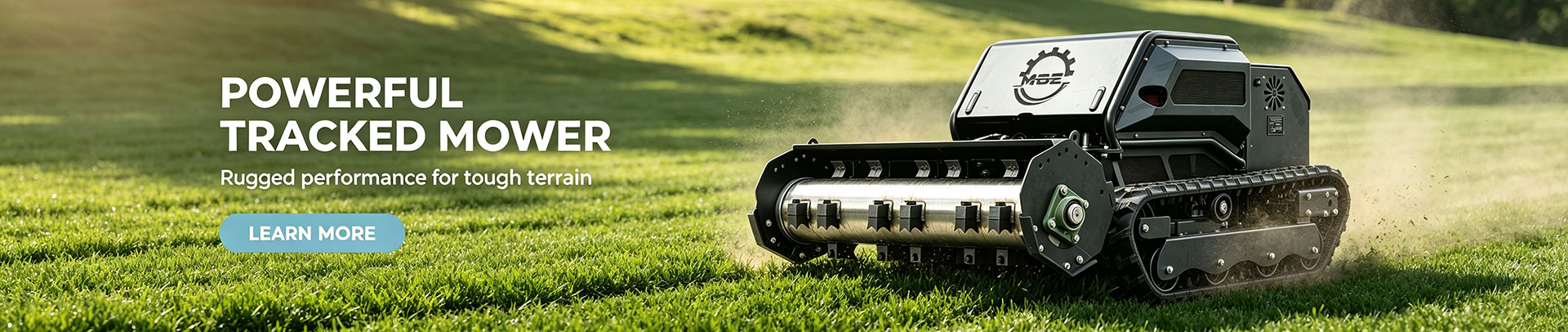
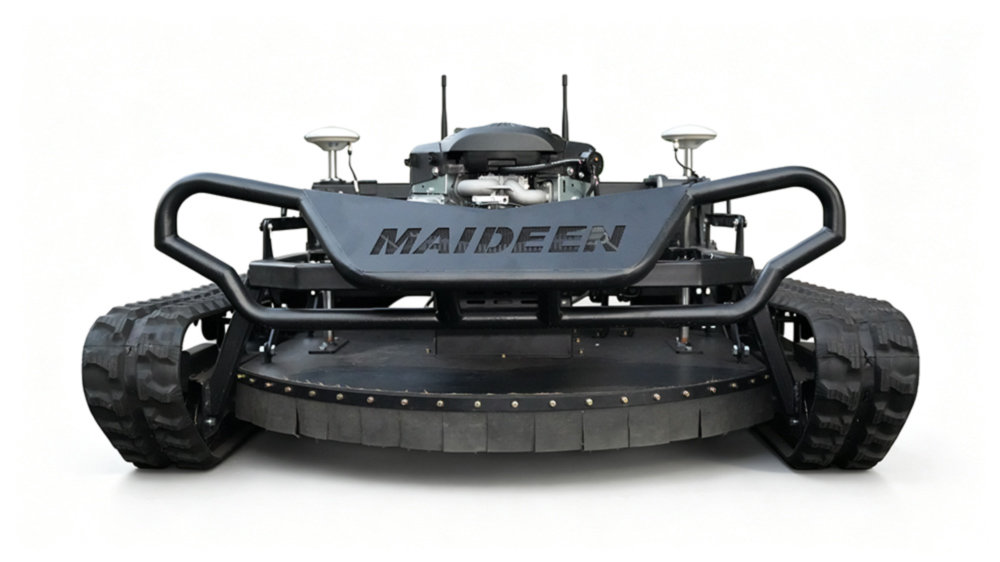
In recent years, the global markets for garden maintenance, agricultural and forest land reclamation, and slope management have continued to expand. As core agricultural and forestry equipment, lawn mowers have seen steady growth in market demand. Driven by the wave of mechanization and intelligent replacement, the traditional manual weeding model is being phased out rapidly. Various electric, fuel-powered and remote-controlled mowers are widely used in municipal greening, photovoltaic operation & maintenance, mountain orchards, riverbank slope protection and other scenarios. Behind this rapid market growth, however, many long-standing pain points have emerged, including product defects, homogeneous cutthroat competition, poor adaptability to working conditions, barriers in foreign trade compliance and inadequate after-sales service systems. These issues severely restrict the high-quality development of the industry and force accelerated industrial iteration and upgrading.
Insufficient adaptability of equipment to field conditions and long-standing challenges in high-risk complex working environments represent the core livelihood and engineering pain points in the sector. Most conventional wheeled lawn mowers and traditional hand-held mowers on the market are only suitable for flat lawns, and show obvious weaknesses on mountains, steep slopes, muddy depressions and rocky wastelands. Such machines deliver poor traction and limited anti-slip and anti-rollover performance. They tend to slip and overturn easily on slopes above 15 degrees, which not only drastically reduces work efficiency but also creates serious safety hazards. Engineering projects such as photovoltaic slope maintenance, mountain slope regulation and riverbank management are generally high-risk working zones. Manual weeding carries a high risk of falls, while conventional machines cannot replace human operators for these hazardous tasks, creating an industry dilemma: "Workers dare not operate, machines cannot handle the job." Meanwhile, ordinary machines feature low chassis and weak protection. They are prone to entanglement and blockage by thick grass, vines and gravel during operation, requiring frequent shutdowns for cleaning. This seriously delays construction progress and fails to meet the heavy-duty commercial land-clearing requirements.
Severe product homogenization and intensifying low-price competition have trapped the industry in low-end competition. As more players enter the market, a large number of small and medium manufacturers and OEM traders have flooded into this segment. Most of them lack independent R&D and innovation capabilities, without core technologies, field test systems or strict quality control standards. They simply copy the appearance and parameters of mainstream products instead of investing in in-depth technology research and quality improvement. To capture market share, many manufacturers adopt low-price strategies by cutting production costs with thin steel plates, inferior spare parts and generic power systems, greatly shortening the service life of finished machines. Many low-end models on the market suffer from easily deformed cutting blades, fast-wearing tracks, power attenuation and unstable electronic control systems. Under heavy load, they are prone to overheating, engine seizure and unexpected shutdowns. The industry is plagued by false parameter marking, compromised quality and mismatch with actual working conditions. It has fallen into vicious competition that prioritizes price over quality and theoretical parameters over real-world performance, suppressing the market advantages of qualified high-quality products.
Single-function design and low overall cost-performance hinder the response to diversified market demands. The vast majority of ordinary lawn mowers only provide basic grass cutting and cannot satisfy diverse modern agricultural and forestry maintenance requirements. Clients including orchard operators, municipal departments and photovoltaic maintenance teams need supplementary operations such as pesticide spraying, snow removal and material transport besides grass cutting. Single-function equipment forces customers to purchase multiple machines repeatedly, substantially increasing costs for procurement, storage and maintenance and lowering equipment return on investment. In addition, products are polarized in adaptability: fuel-powered models generally produce high noise and emissions, making it hard to enter environmentally stringent markets in Europe and America; lightweight battery-powered models suffer from limited battery life and cannot handle large-area wasteland clearing and long-hour heavy-duty work. The imbalance between gasoline and electric solutions makes it difficult to satisfy global diverse working conditions and policy requirements simultaneously.
High foreign trade compliance thresholds create major barriers for exports, blocking small and medium manufacturers from overseas markets. Amid increasingly stringent global environmental regulations, Europe, America, Australia, Southeast Asia and other regions keep tightening standards for emissions, safety and battery compliance for garden machinery. International certifications such as CE, EPA and UN38.3 have become mandatory requirements for exports. These certifications involve long lead times, high costs and strict technical criteria. Many small and medium assemblers fail to obtain qualifications or meet product standards, making customs clearance impossible and causing them to miss overseas growth opportunities. Furthermore, market regulations vary widely from country to country. Europe prioritizes zero emissions and low noise, while Australia and the Middle East favor high-power heavy-duty machines. A single model can hardly meet global diversified demands. Most enterprises lack customized modification capacity to match local overseas requirements, making foreign trade expansion difficult.
Imperfect after-sales systems and high maintenance costs result in poor end-user experience. According to industry research, more than 30% of users report high later-stage maintenance costs for lawn mowers. Low-end models feature poorly interchangeable spare parts and fast wear, leading to complicated repairs. Most small and medium manufacturers focus on sales rather than after-sales service. They lack standardized spare parts inventory, professional technical teams and long-term warranty policies. When equipment breaks down, long procurement cycles for spare parts, difficult repairs and delayed technical support disrupt daily operation. It also creates challenges for end users seeking solutions and reduces repurchase rates. In foreign trade, after-sales pain points are even more prominent. Long cross-border logistics cycles, high spare part shipping costs and absence of local support leave overseas distributors and end users stuck in the predicament: "Easy to buy, hard to maintain", which seriously damages the international brand reputation of Chinese lawn mowers.
Industry analysts state that the lawn mower sector is at a critical turning point of transformation. The challenges including low-end homogenization, poor terrain adaptability, insufficient compliance and weak after-sales service are both bottlenecks and breakout opportunities for high-quality original manufacturers. Going forward, as the market phases out cheap and shoddy assembled products, original factories with independent R&D strength, full-condition adaptability, complete international certifications and systematic after-sales service will overhaul the industry landscape. They will lead the shift from cutthroat low-price competition toward a new phase of high-quality development featuring quality, intelligence, scenario-oriented design and globalization. By focusing on the blue-ocean niche of high-risk operation on complex terrain, domestic agricultural and forestry machinery can achieve industrial upgrading and breakthrough growth in global markets.
WhatsApp:+852 5462 5594
Mobile: +852 5462 5594
Email: [email protected]
Address: No. 26 Jiacheng Road, Economic and Technological Development Zone, Jining City, Shandong Province
We chat